Bookings
Book your stay
Accommodation in Namibia: A Unique Landscape
Namibia’s accommodation scene is deeply shaped by its geography — vast deserts, rugged mountain terrain, and remote wilderness — as well as its commitment to sustainable tourism. Rather than a one-size-fits-all hotel industry, visitors to Namibia experience a tapestry of stays: luxury desert lodges, community-run camps, self-catering chalets, tented camps, rest camps, and more. Here’s a breakdown of the main accommodation types and what makes them uniquely Namibian.
- Luxury Safari Lodges & Desert Camps
- Rest Camps, Travel Lodges & Budget Options
- Coastal & Beach Accommodation
- Cultural & Boutique Hotels
1. Luxury Safari Lodges & Desert Camps
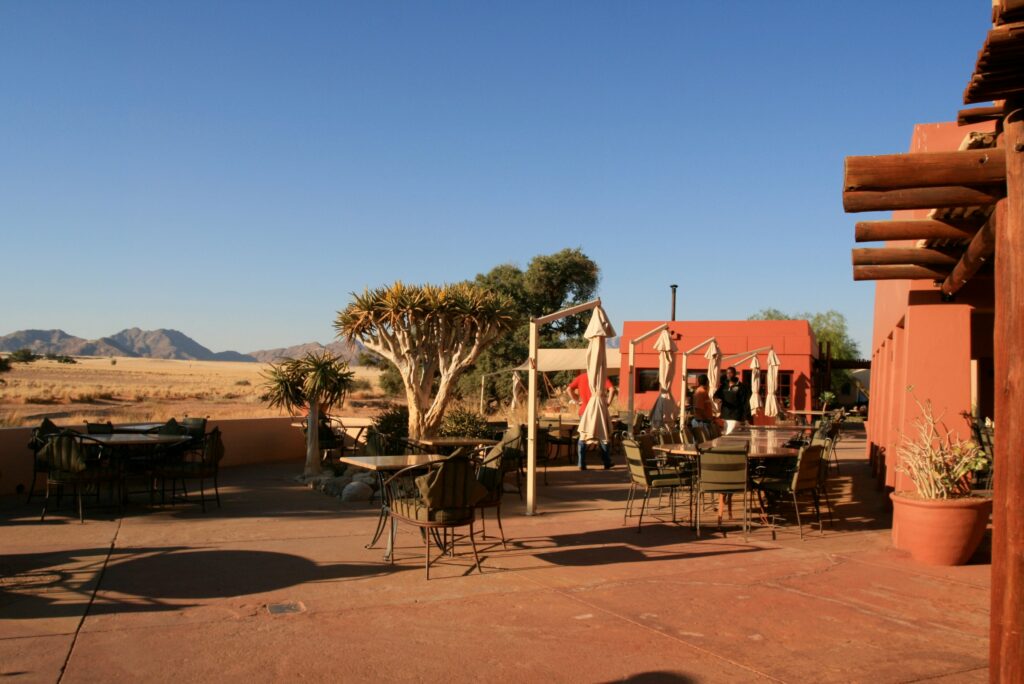
Desert Lodges: One of the most iconic forms of accommodation in Namibia is the desert lodge. These are often situated in private reserves or conservancies bordering or within national parks (e.g., near Sossusvlei in the Namib Desert). What’s unique here is how the architecture and design respond to the environment. For example, Sossusvlei Desert Lodge has glass-fronted suites and skylights so guests can stargaze from their beds.
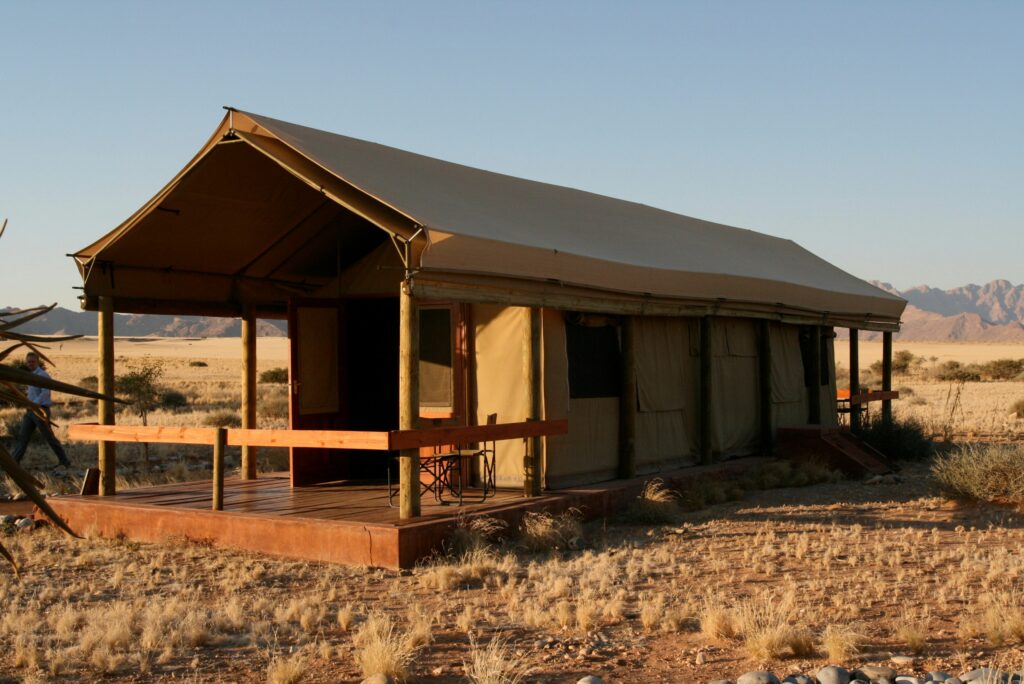
Tented Camps: In remote wilderness areas, many lodges offer permanent or semi-permanent tents. These combine the intimacy and closeness to nature of traditional camping with comfortable amenities: often en-suite bathrooms, elevated decks, and private verandas.
Sustainable Design: Many high-end lodges in Namibia emphasize eco-sustainability. They minimize their ecological footprint through solar power, local materials, and low-impact construction.
Astronomy & Dark Sky Reserves: Because of Namibia’s remote and unpolluted skies, some lodges are perfect for stargazing. The NamibRand Nature Reserve, for instance, is recognized as a Dark Sky Reserve. Lodges in or around here often have features that help guests connect with the cosmos — telescopes, rooftop viewing platforms, or rooms with open ceilings/skylights
Private & Exclusive Wilderness Access: Many of the luxury camps are located in private concessions or remote reserves, meaning fewer guests, exclusive game drives, and more intimate wildlife experiences. For example, lodges near Etosha or in Damaraland provide exclusive access and tailored safari experiences.
Architectural Storytelling: Some lodges reflect local or historical architectural themes. Onguma The Fort, near Etosha, has a distinctive design blending Moroccan styles with local influences. Meanwhile, Shipwreck Lodge on the Skeleton Coast is made to resemble shipwreck cabins, echoing the eerie coastal environment.
2. Rest Camps, Travel Lodges & Budget Options
Rest Camps: These are simpler, often state-run campsites or cabins located along major tourist routes or within national parks.
They provide practical, no-fuss accommodation — good for travelers who want to be close to nature without splurging on luxury.
Self-Catering Lodges: For flexibility, many travellers opt for self-catering houses, chalets, or huts. These places come equipped with kitchens, so guests can cook for themselves.
This is ideal for families, long-term travelers, or people exploring Namibia by road.
Community Campsites: These are often local, community-run sites. Staying here allows visitors to support local communities directly while experiencing a more grassroots style of tourism. Some campsites are very simple; others may have basic shared facilities.
Caravan / Overlanding Campsites: Given Namibia’s popularity for self-drive safaris, there are many camping sites suited for tents, caravans, and overlanding vehicles. Facilities range from rustic to more developed (with electric hookups, water, ablution blocks).
3. Coastal & Beach Accommodation
Desert Meets Ocean: On Namibia’s Atlantic coast, especially around Swakopmund, you’ll find a completely different accommodation vibe — beach lodges, guesthouses, and boutique hotels. These places often offer a contrast between the desert’s stillness and the ocean’s motion.
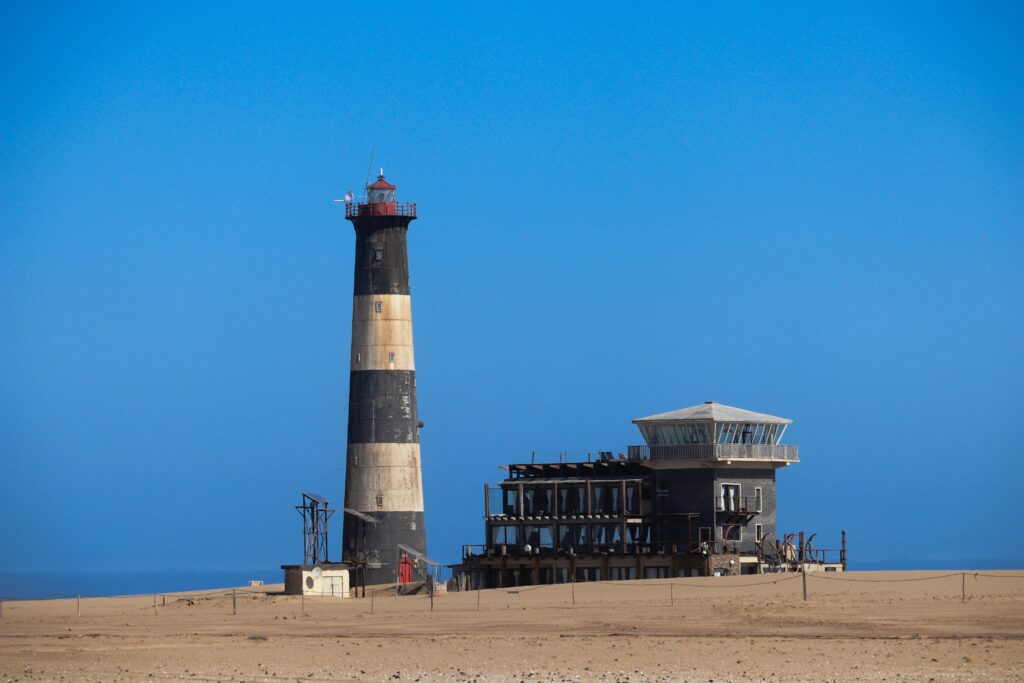
Skeleton Coast Lodges: On the more remote coastline, lodges like Shipwreck Lodge (mentioned above) allow guests to stay in cabins built amongst dunes and driftwood. This gives an eerie but beautiful sense of isolation and wildness, with views of shipwrecks, the desert, and the sea all in one.
Small Beach Resorts: Places like Langstrand (Long Beach) offer seaside accommodation with recreational options such as dune quad biking, paragliding, and more.
4. Cultural & Boutique Hotels
Urban Boutique Hotels: In cities like Windhoek and Swakopmund, there’s a growing number of boutique hotels and guesthouses. These often reflect Namibian design, heritage, or craftsmanship.
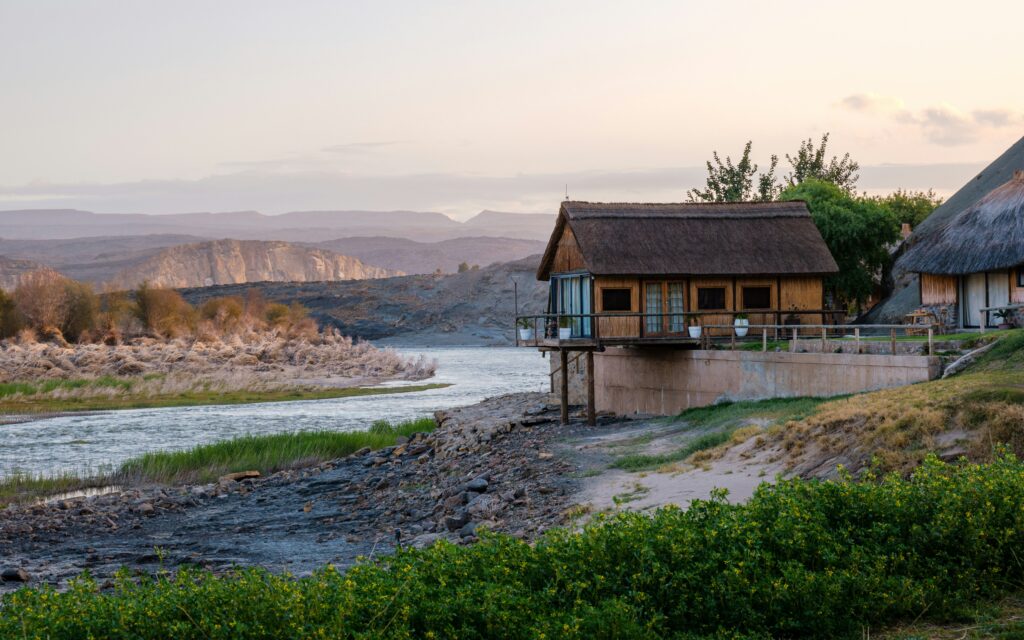
Locally-Inspired Lodges: Some lodges are inspired by local tribal architecture or cultural motifs. For instance, in remote areas, lodges may draw from Himba village design or use local materials and styles to create an authentic but upscale environment.
Group Lodges: Namibia also offers group lodges — retreats for larger groups, families, or corporate gatherings. For example, Wolwedans Dune Lodge is such a place, designed to be both luxurious and communal, with large chalets and shared lounge/dining areas.
What Makes Namibian Accommodation Truly Unique
- Integration with Nature
- Remoteness & Exclusivity
- Eco-conscious Tourism
- Stargazing Opportunities
- Architectural Storytelling
- Diverse Accommodation Style